

The secrets behind the greatest war in history
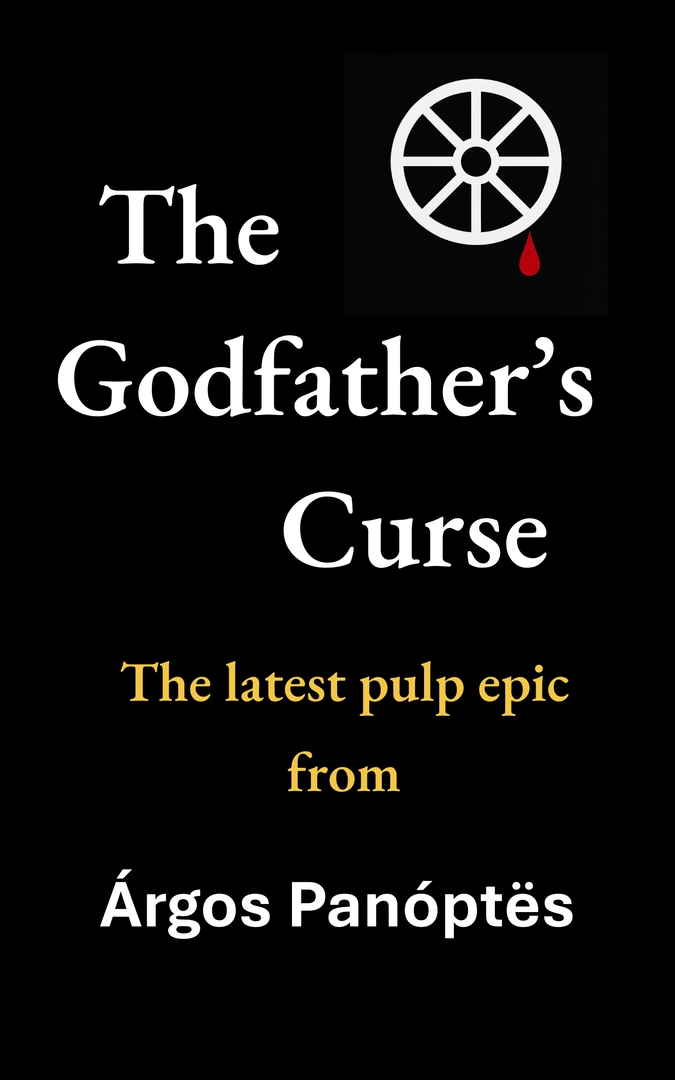
The Godfather's Curse
The secrets behind the greatest war in history
It all starts at the wedding of the god-father’s daughter. It was said that on days like this, you could ask Zev́s anything, and he’d grant your wish.
It ends in Tártaros, the serious offenders’ wing of the underworld, where Háidës torments lost souls for all eternity.
And on its winding path, we meet the most stupidly entitled king in all of ancient history. We meet a man brought back from the dead, who shacks up with Poseidón at the sea-god’s modest semi-detached underwater palace at Aigaí. We encounter a wildly over-protective father who plays a deadly game with the suitors of his beautiful daughter, who incidentally isn’t as chaste as her father believes. We see mortal royalty set out to build an empire. We witness the efforts of the war-god Árës to start the greatest conflict in world history, to elevate himself in the pantheon.
We meet the araí, the curses who serve heaven. Those nameless incorporeal beings, so low in divine status that they don’t even get to live in the basement of the Bronze Palace – yet who are so vital to the workings of Olýmpian justice.
The curses do a lot of the leg-work in the matter of chastening mortal Héllenës. But how does a curse work? Can a whole family be cursed for the actions of one man?
And can a curse decide to go her own way, to act independently of the will of the goddess of retribution?
In a sweeping epic tale of ambition on earth and in heaven, of loyalty and betrayal, of sex and violence and miscellaneous skulduggery, The Godfather’s Curse answers all these and other important theological questions. Questions that could get you killed, or worse.
Is the king of the gods actually bound by the will of the Fates? Does the god of prophecy actually control the future? Should there be gender balance on the Olýmpian council?
And what might happen if War and Retribution get into bed, and not just metaphorically?
The Godfather’s Curse is the prequel to the prequel to the greatest mob story ever told.
Pure theological noir.
 Print
Print 